
Core Features
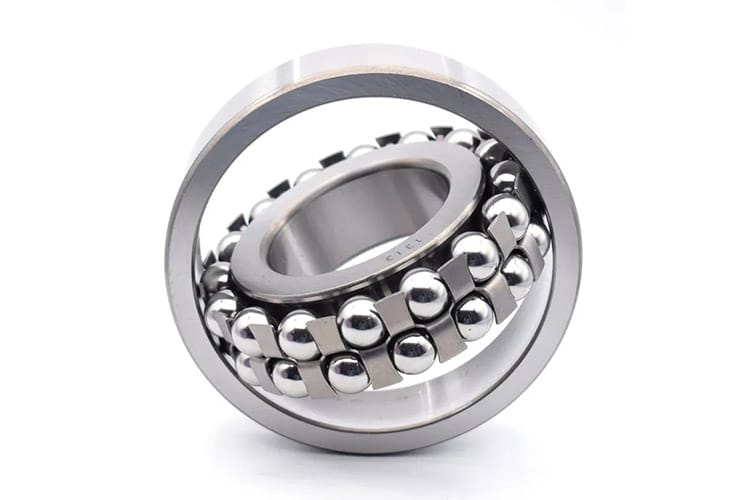
Self-aligning ball bearings feature a double-row inner ring and a spherical outer ring raceway. They offer the unique advantage of automatic compensation for installation misalignment, making them suitable for applications with flexible shafts and limited installation accuracy. Key features include:
Strong self-aligning capability: The outer ring raceway is spherical. When the shaft experiences slight bending (such as deflection under heavy load) or radial misalignment (±2° to ±3°) during installation, the double-row steel balls adaptively adjust along the spherical raceway, avoiding localized stress concentration in the bearing and addressing the potential for seizure or premature wear caused by shaft-seat misalignment. The self-aligning angle is superior to that of conventional deep groove ball bearings, which can only compensate for misalignment within ±0.5°. Mainly radial, lightly axial: Its core capability is to withstand radial loads, with a radial dynamic load rating 10%-15% higher than that of deep groove ball bearings with the same inner diameter (for example, a 1204 self-aligning ball bearing with a 20mm inner diameter has a radial dynamic load of 12.8kN, compared to the 9.88kN of a 6204 deep groove ball bearing). It can only withstand slight bidirectional axial loads (approximately 1/5-1/3 of the radial load) and is not suitable for purely axial load applications.
Low noise and stability, suitable for medium and low speeds: Double rows of steel balls evenly distribute the load, resulting in an operating vibration speed of ≤2.8mm/s (P0-grade accuracy). Its noise level is 5-8dB lower than that of tapered roller bearings. Its applicable speed range is 1000-8000r/min (depending on the model), making it particularly suitable for medium and low-speed rotating equipment such as ventilators and water pumps. Simple structure and easy maintenance: Most models utilize a stamped steel cage, which is lightweight and low-cost. Some larger models (such as the 22300 series) can omit the cage (full-ball construction), increasing radial load capacity. A high degree of standardization eliminates the need for shaft adjustments during replacement, resulting in low maintenance costs.
Applications
The self-aligning ball bearing’s “spherical alignment” and radial load-bearing characteristics make it a key component in applications with complex installation conditions and prone to shaft deformation. Typical applications include:
General machinery:
Fan and blower main shafts: Compensate for shaft deflection caused by impeller imbalance during fan operation, preventing bearing overheating.
Centrifugal and submersible pump shafts: Accommodate radial misalignment between the pump body and motor, ensuring stable liquid delivery.
Textile machine roller shafts: Resist minor frame deformation after long-term operation in textile workshops, ensuring fabric weaving accuracy.
Agricultural and Mining Machinery:
Tractor Suspension Systems: Compensate for frame vibration and deformation during field operations and withstand radial loads on the suspension mechanism.
Small Conveyor Idlers: Adjust for conveyor belt straightness deviations during installation, reducing roller resistance.
Grain Processing Machinery (e.g., Rice Mills): Address shafting stress variations between unloaded and fully loaded equipment, improving operational stability.
Light Industry and Office Equipment:
Printing Press Rubber Roller Shafts: Compensate for minor bending of rubber rollers after long-term use, ensuring alignment of printed patterns.
Washing Machine Drain Shafts: Adjust for radial runout during high-speed rotation of the washing machine drum, reducing operating noise.
Small and Medium-Sized Motor End Cap Bearings: Used in low-power motors (e.g., below 1.5kW), compensating for shaft-end cap misalignment during motor assembly. Common Variants and Accessories
Self-aligning ball bearings are available in a variety of specialized models to meet diverse operating requirements. Key variations and selection criteria are as follows:
Classification by Sealing Type:
Open (unsealed, such as 1204): Suitable for dry, clean environments where regular lubrication is required (such as indoor ventilators). Requires a bearing housing oiler for relubrication.
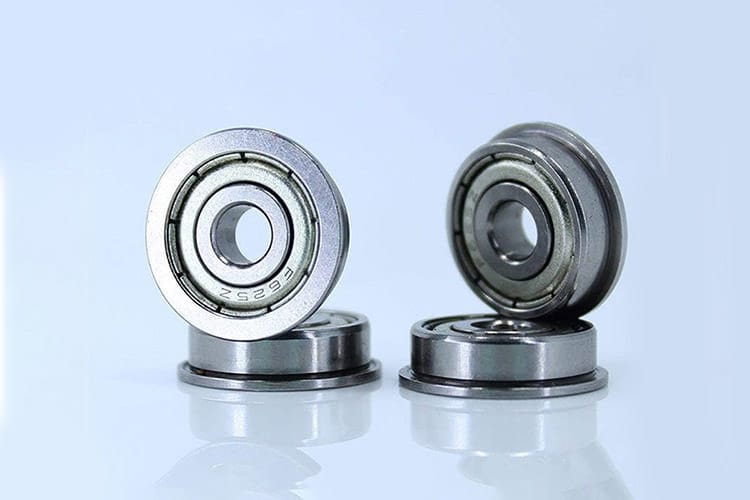
With a metal dust cover (ZZ type, such as 1204ZZ): Dustproof compared to open models, preventing dust from entering the raceway. Suitable for dusty environments such as textile workshops and grain processing plants, requiring less frequent lubrication.
With a rubber seal (2RS type, such as 1204-2RS): Dustproof and waterproof to IP54, it protects against splashing water and fine particles. Suitable for humid environments such as outdoor water pumps and washing machines. Pre-greased at the factory, it requires no relubrication throughout its lifecycle. Classification by mounting accessories:
With adapter sleeve (e.g., 1204K+H204): The adapter sleeve is a tapered sleeve that secures the bearing to the shaft via a nut. Suitable for applications with lower shaft diameter accuracy (h9-h11), it eliminates the need for shaft shoulder machining during installation and is commonly used in fans and pumps.
With push-off sleeve (e.g., 2204K+AH204): The push-off sleeve is used in conjunction with the adapter sleeve to facilitate bearing removal. Suitable for equipment requiring regular maintenance (e.g., mining conveyor rollers), disassembly requires only loosening the push-off sleeve nut to remove the bearing. Classification by Material and Precision: